

The Rotary Club of Cataraqui Kingston has agreed to be the International Partner on one of a pair of Rotary Global Grant Projects led by the Rotary Club of Muyenga in Uganda. The project will increase substantially the capacity of the country to provide blood for medical treatment. Listen to Rotarian Dr. Richard Kalungi present the history of the blood bank, the expansion project through the deployment of a new TTI (Transfusion-Transmitted Infections) machine and cold room, and an overview of the many projects Rotarians in Uganda have led to serve their 50 million citizens.
Dr. RIchard Kalungi, Rotary Club of Kampala South
Dr. Richard Kalungi is a dedicated Medical Doctor and Public Health Practitioner with a passion for community health and wellness. He holds further training in business administration and project management. He is a Preventive Medicine Expert and is Medical Committee Chair at Cancer Run Ug and Personal Development Mentor at Action For Development.
As a Rotarian in the Rotary Club of Kampala South, he has made significant contributions to various project initiatives at Rotary Club and District level. A dynamic public speaker, communicator, and medical innovation enthusiast, he dreams of setting up a health innovations and entrepreneurship hub to better health professionals and improve quality and access to healthcare.
The Mengo Hospital Blood Bank
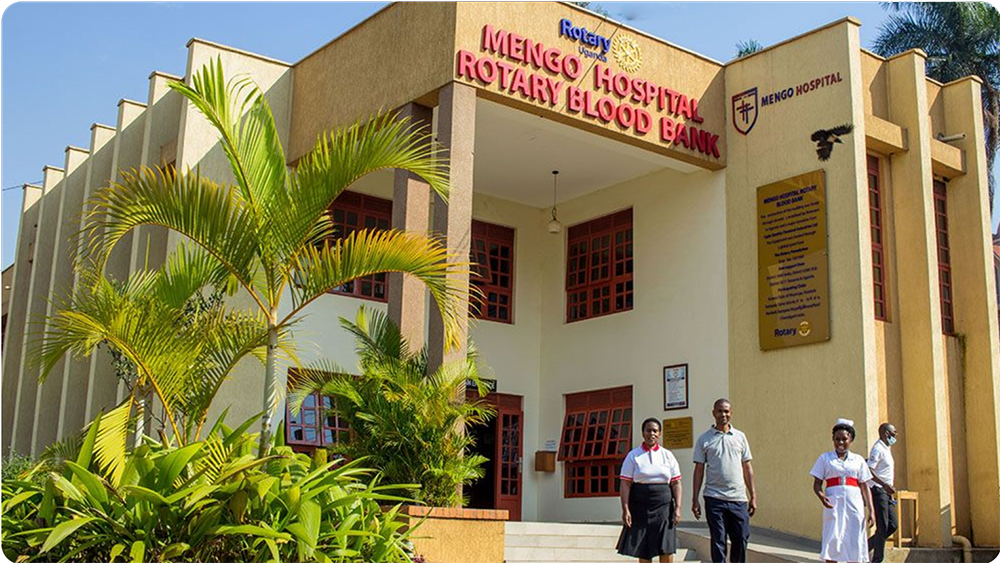
The Mengo Hospital Blood Bank has been running since 2017 and reduced by 40% the shortage of blood needed for medical treatment. The needs include some 20,000 people injured annually in accidents, mothers bleeding in childbirth, and people suffering from malaria and cancer.
The Mengo Hospital Rotary Blood Bank, inaugurated in February 2017 by Rotary International President John F. Germ and Uganda’s Prime Minister Rt. Hon. Dr. Ruhakana Rugunda, is Uganda’s second-largest and only non-governmental blood bank. It operates under the regulation of the Uganda Blood Transfusion Services and currently contributes about 12% of the nation’s blood collections, guided by the leadership of RIDE Emmanuel Katongole and the Mengo Hospital Rotary Blood Bank Board.
The Blood Bank Expansion
Despite these efforts, Uganda continues to face a severe annual deficit of 150,000 units of blood, leading to preventable deaths, particularly among mothers, children, accident victims, and patients with chronic conditions such as cancer and sickle cell disease.
Main Objectives
The Equipping Mengo Hospital Rotary Blood Bank Project seeks to expand the bank’s capacity and efficiency to meet this urgent national need. The primary objectives are:
- Upgrade Testing Capacity: Procurement of a TTI Testing Machine for rapid and accurate screening of transfusion-transmissible infections, ensuring 100% safe blood supply.
- Boost National Contribution: Enable Mengo Hospital Rotary Blood Bank to contribute up to 30% of Uganda’s total blood collections, directly addressing the national shortage.
- Improve Health Outcomes: Achieve a 50% reduction in preventable deaths caused by blood shortages, through timely and safe transfusions.
- Reduce blood processing turn around time: Achieve a 24hours blood processing time from the current 3 days due to outdated technology currently used.
Beneficiaries
The direct beneficiaries of this project are patients in need of blood transfusions, including mothers during childbirth, children suffering from severe anaemia, accident victims, and individuals with life-threatening conditions requiring regular transfusions. Indirectly, the entire Ugandan healthcare system will benefit from strengthened capacity, reduced mortality rates, and improved public health outcomes.
Funding Needs
The project requires $186,060, to be raised through a combination of contributions from Rotary Districts 9213 & 9214, local Rotary clubs, international partnering clubs, The Rotary Foundation (TRF), and International District Designated Funds (DDF).
By equipping Mengo Hospital Rotary Blood Bank, Rotary seeks to strengthen Uganda’s healthcare system, save lives, and advance global health goals through sustainable and locally governed solutions.
The addition of a new TTI machine and a new cold room to store the blood will increase by 11-12% Uganda's capacity to supply blood for medical treatment.
In just a few months, Rotary clubs around the world have rallied to support the project. At time of writing (October 12, 2025) they include at least 19 clubs from Uganda (6), India (5), Canada (5), and Pakistan (1) and invitations have gone out to clubs in other countries.
Rotary in Uganda
Rotarians in Uganda have a strong record of remarkable humanitarian service in their own country, much of which is in health care. Examples include the construction of five hospitals, the development of a Maternal and Child Health maternity centre, providing oxygen for every hospital, providing health care directly to the people where they need it, and training for medical providers. Every Rotary club in the country has contributed to this work. Some is done by individual clubs, but much is done through inter-club collaboration.
Other work also has health benefits. A large ($2,000,000US) WASH (Water, Sanitation, and Hygiene) project provided hand-washing equipment and safe water supplies.
Dr. Kalunga concluded his talk with a warm welcome to visit Uganda, to see the country, meet its people, and join in Rotary work. The needs will continue to grow; Uganda's population is projected to double by 2050.